


Yellow Jasmine
(Gelsemium sempervirens)
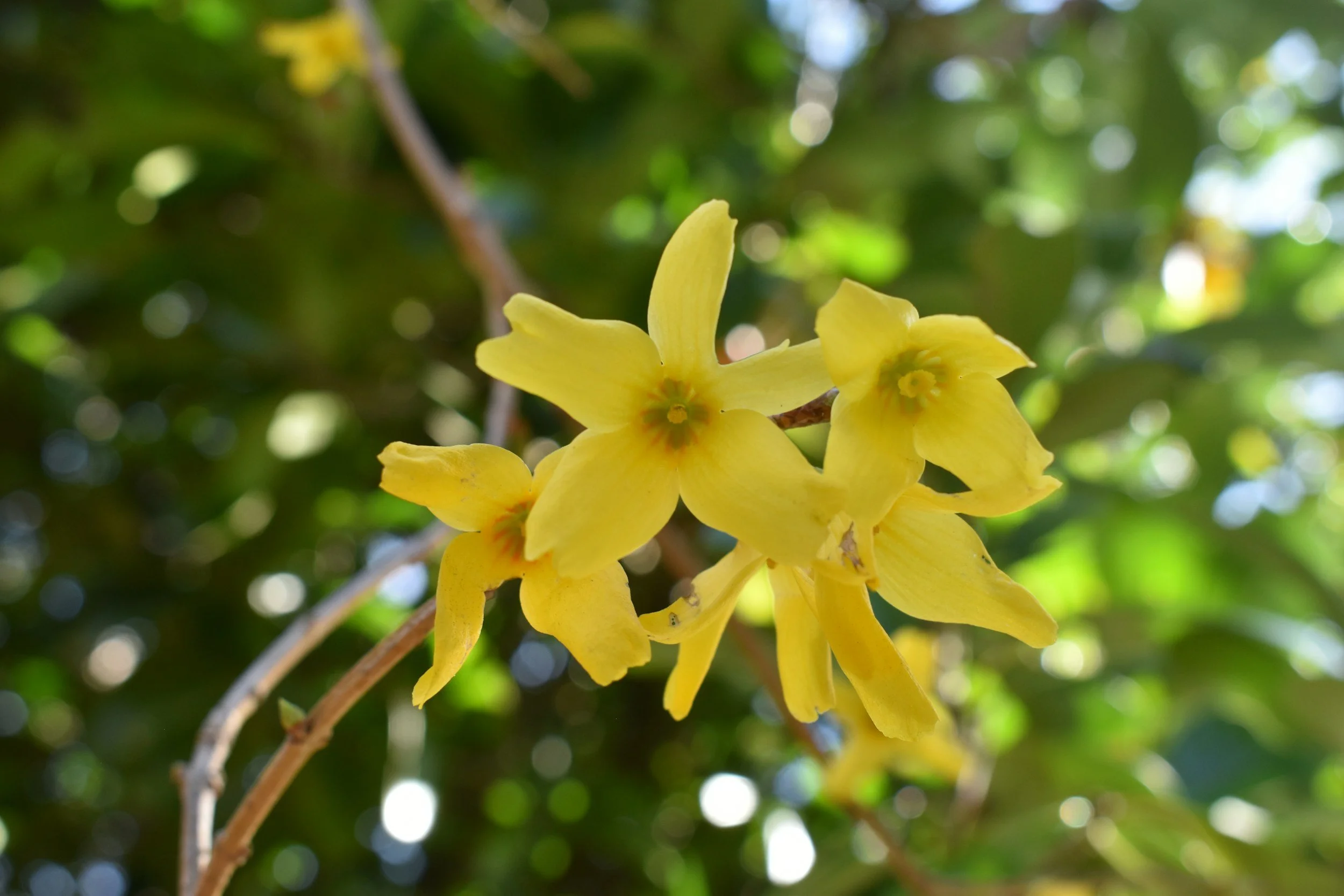
Gelsemium sempervirens (yellow jessamine / Carolina jasmine) is an evergreen, twining climber native to the southeastern USA down into Central America and widely grown as an ornamental for its strongly fragrant, yellow, trumpet-shaped flowers. From a materia medica perspective, it’s a potent, low-dose nervine depressant and analgesic associated with neuralgic and “nerve-tension” pain patterns (particularly facial and dental pain). Because it contains highly active indole alkaloids and has a very narrow therapeutic window, it is not a self-care herb; clinical use requires careful screening and professional supervision.
Plant family: Gelsemiaceae
Other significant names: Yellow jessamine, Carolina jasmine, evening trumpet flower
Parts used (as taught/recorded): Rhizome & root (radix) Gelsemium
Common forms of prescription: Tincture (restricted).
Restriction: The Human Medicines Regulations 2012, Schedule 20, Part II.
This information is for educational purposes about traditional herbal use and is not a substitute for medical advice or treatment. Gelsemium sempervirens should only be used under the supervision of a qualified medical herbalist or healthcare professional.
Yellow Jasmine (Gelsemium sempervirens) - Clinical Snapshot
(Educational purposes only)
Primary actions
Analgesic (neuralgic pain)
Traditionally used in very small doses for severe “nerve pain” patterns (e.g., facial or dental neuralgia), where pain is sharp, shooting, or lightning-like.Sedative / CNS depressant
Acts as a strong nervous system depressant, which is why it has historically been reserved for tightly controlled, low-dose prescribing rather than general use.Anxiolytic (tension-linked states)
Described in Western tradition as calming marked nervous tension and restlessness that can intensify pain presentations.Diaphoretic (traditional action)
Historically classed as a diaphoretic, meaning it was used to support perspiration in certain acute patterns, though this sits behind its better-known nervine actions.

Primary indications
Trigeminal neuralgia
Traditionally selected for intense, electric-shock facial pain along the trigeminal distribution, it is used only in very low doses due to toxicity risk.Dental/facial nerve pain (incl. severe tooth pain patterns)
Used historically for severe toothache or facial neuralgia, where pain is sharp, radiating, and strongly linked to nerve irritation rather than simple inflammation.Migraine-type pain with marked nervous tension
Considered when migraine presents alongside pronounced nervous excitability, restlessness, or “wired-but-exhausted” tension that amplifies symptoms.Trauma pain with agitation/tension (acute, low-dose context)
Sometimes referenced for acute pain after shock or injury when pain is accompanied by visible nervous agitation, again requiring specialist oversight and conservative dosing.
-
Avoid use in:
Pregnancy / lactation
Heart disease, hypotension, bradycardia risk
Myasthenia gravis
Use extra caution with driving/operating machinery due to soporific effects.
Use in children: Avoid.
-
Description text goes here
-
Description text goes here