


Wood Betony
Wood Betony
(Betonica officinalis)
Plant Family
Lamiaceae
Other significant names
Bishopswort
Parts used
Herba
Typical forms of prescription
Tincture
Infusions

Wood Betony (Betonica officinalis) - Clinical Snapshot.
Primary Actions
Sedative
Bitter
Tonic
Aromatic
Astringent
Nervous trophorestorative (supports and restores nervous system function)
Relaxant
Hypotensive (lowers blood pressure)
Diuretic
Emmenagogue (stimulates menstrual flow)
Primary Indications
Traditionally used to support:
Liver and digestive complaints, including indigestion and sluggish function
Nervous headaches, poor concentration, and memory difficulties
Anxiety, neuralgia, vertigo, and dizziness
Nightmares in children
Respiratory issues such as catarrh, asthma, bronchitis, and productive coughs
Urinary tract conditions: cystitis, bladder and kidney stones
Musculoskeletal complaints, including bruises, strains, sprains, and varicose veins (used externally)
Support during benzodiazepine withdrawal (as part of a comprehensive approach)
⚠️Cautions / Safety⚠️
No major contraindications are known.
As with many members of the Lamiaceae family, caution is advised during pregnancy.
Betonica officinalis
Phytochemistry and Pharmacology
-
Includes: Harpagide, ajugol
Action: Nervine, anti-inflammatory, mildly analgesic
Use: These contribute to betony’s gentle calming effect on the nervous system, useful in tension-type headaches, neuralgia, and digestive disorders with a nervous component. Iridoids also have trophorestorative potential, supporting long-term nerve repair and calm.
-
Action: Astringent, anti-inflammatory, mucosal tonic
Use: Tannins tone and strengthen mucous membranes, making betony helpful in sore throats, mouth ulcers, loose stools, and mild bleeding. They also lend support in leaky gut-type presentations or chronic catarrh.
-
Includes: Pinene, cineole (in small amounts)
Action: Mildly aromatic, carminative
Use: These compounds give betony a gentle digestive effect, easing gas, bloating, and tension-related digestive discomfort, especially when combined with other carminative herbs.
-
Includes: Stachydrine
Action: Circulatory stimulant, uterine tonic (mild)
Use: Stachydrine is believed to stimulate uterine tone slightly and may help support menstrual regulation and pelvic circulation, though this is not the herb’s primary use.
-
Includes: Apigenin, luteolin
Action: Antioxidant, anti-inflammatory, neuroprotective
Use: Flavonoids enhance betony’s nervine effects, helping protect the brain and nervous tissue from oxidative stress, and support mental clarity and resilience.
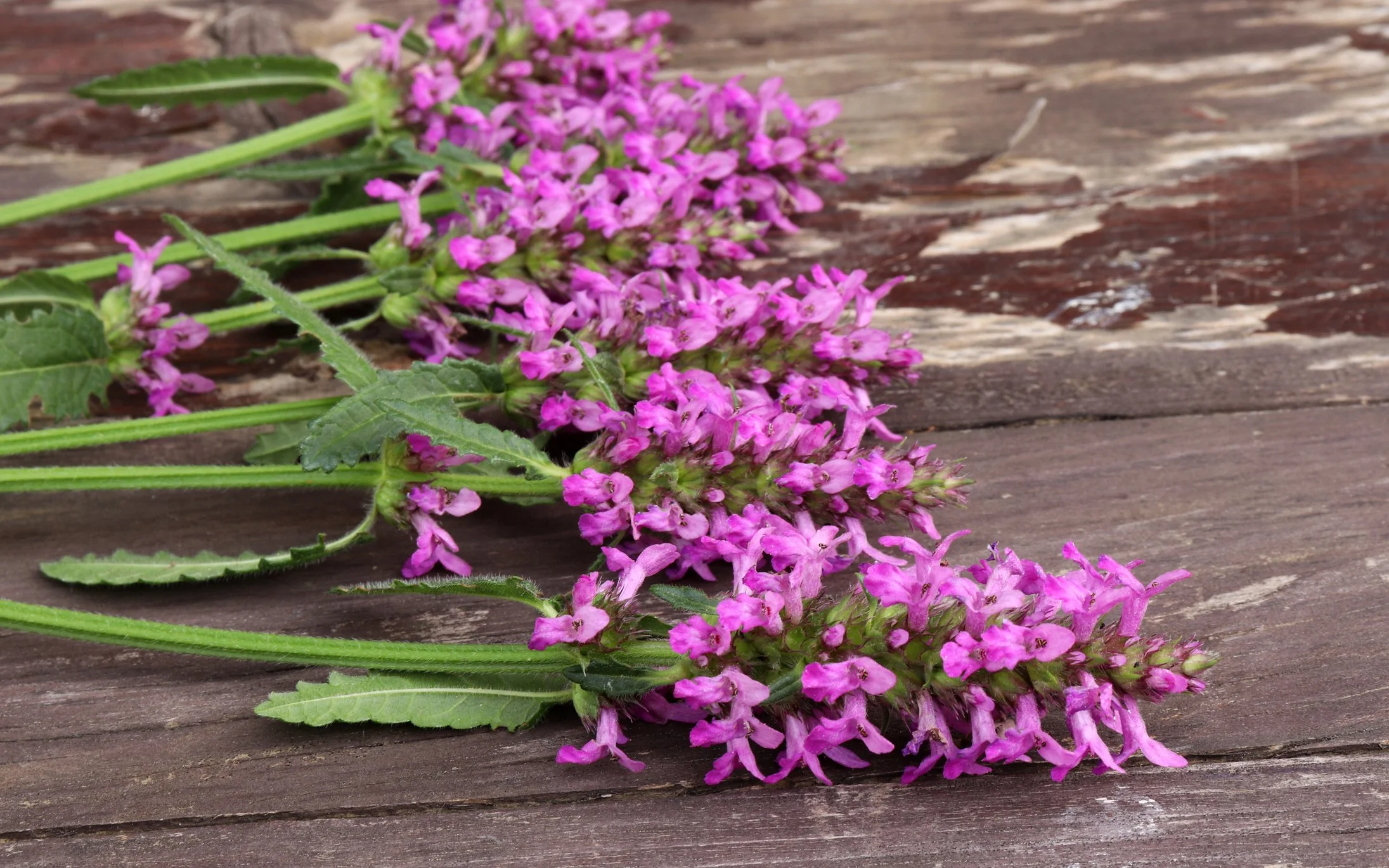
Traditional Use
Wood betony was once regarded as a near-universal remedy, so highly valued that the saying went, “Sell your coat to buy betony.” It was also praised as a “sovereign remedy for all maladies of the head,” reflecting its long-standing use in traditional European herbal medicine for treating conditions involving the mind and nervous system.
Clinical Discussion
In modern herbal practice, Betonica officinalis continues to be valued for its calming and restorative effects on the nervous system. It is commonly used for tension headaches, neuralgia, poor concentration, memory issues, and even nightmares, particularly where these are linked to anxiety or mental fatigue. Betony is especially supportive for individuals experiencing stress-related anxiety with symptoms like mental fog or spaciness, making it a valuable ally for students or those under prolonged strain.
As a member of the mint family (Lamiaceae), it contains essential oils with antimicrobial, carminative, and antispasmodic properties. These actions extend its use to digestive complaints and upper respiratory infections. It is beneficial when headaches are linked to digestive disturbance or head congestion caused by colds or viral infections.
Cultivation & Harvesting
The aerial parts are harvested just before the flowers fully open, when the plant’s volatile oils and medicinal potency are at their peak.
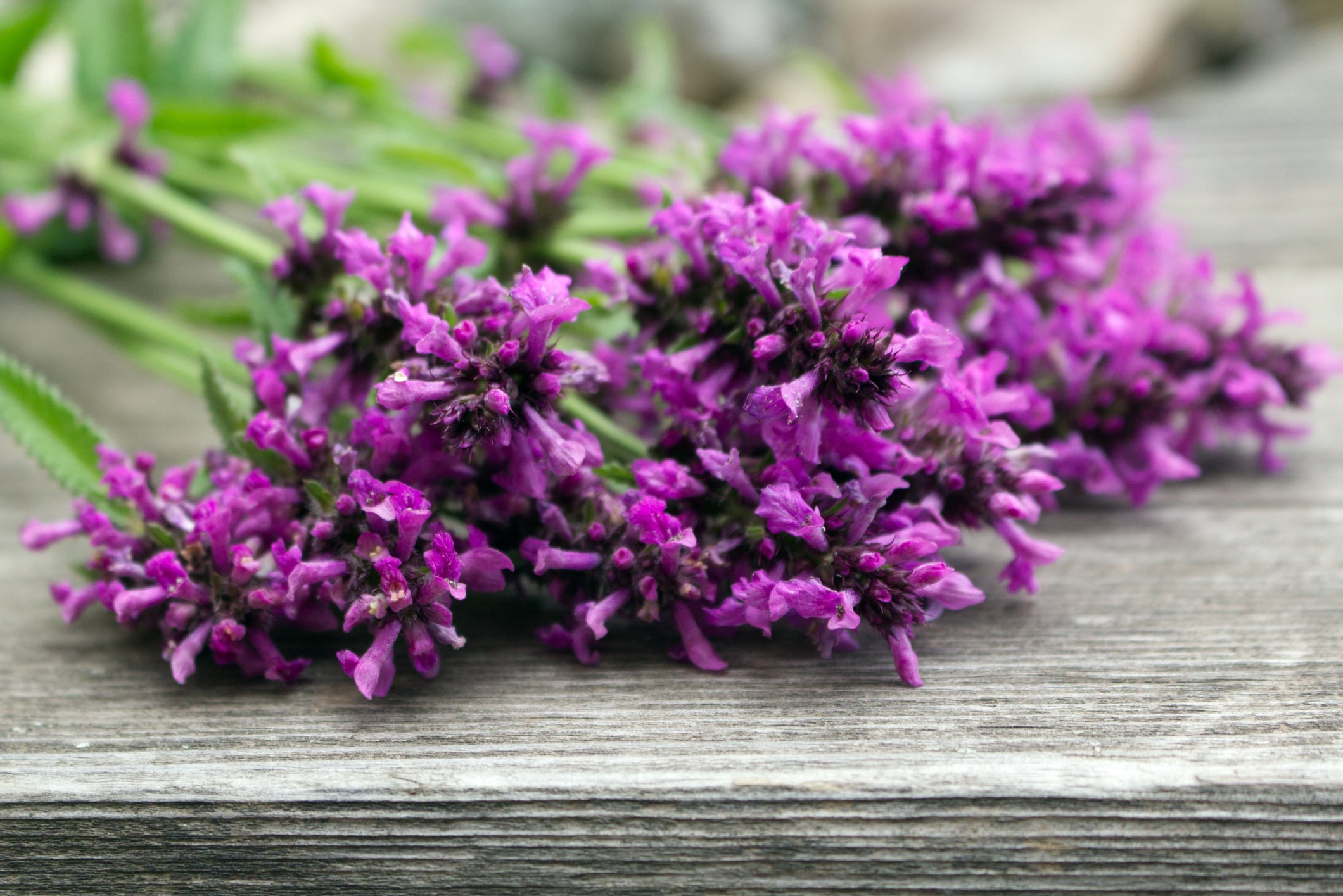
Key Botanical Features of Wood Betony (Betonica officinalis)
Growth
Betonica officinalis is a clump-forming, herbaceous perennial native to Europe and parts of western Asia.
It typically grows to 30–60 cm (12–24 inches) in height.
Stems are square, upright, and unbranched or sparsely branched, characteristic of the mint family (Lamiaceae).
Prefers meadows, woodland clearings, and grassy banks, thriving in light shade or full sun.
Roots
Possesses a short, thick rhizome with fibrous roots.
Adapted to well-drained, moderately fertile soils.
Slow to spread but long-lived once established.
Leaves
Arrangement: Opposite, mostly basal rosettes with a few smaller leaves along the flowering stem.
Shape: Ovate to oblong with scalloped or crenate edges.
Size: Basal leaves can be 5–10 cm long, larger than upper stem leaves.
Colour: Deep green, often slightly hairy on both surfaces.
Surface: Slightly wrinkled with a prominent central vein.
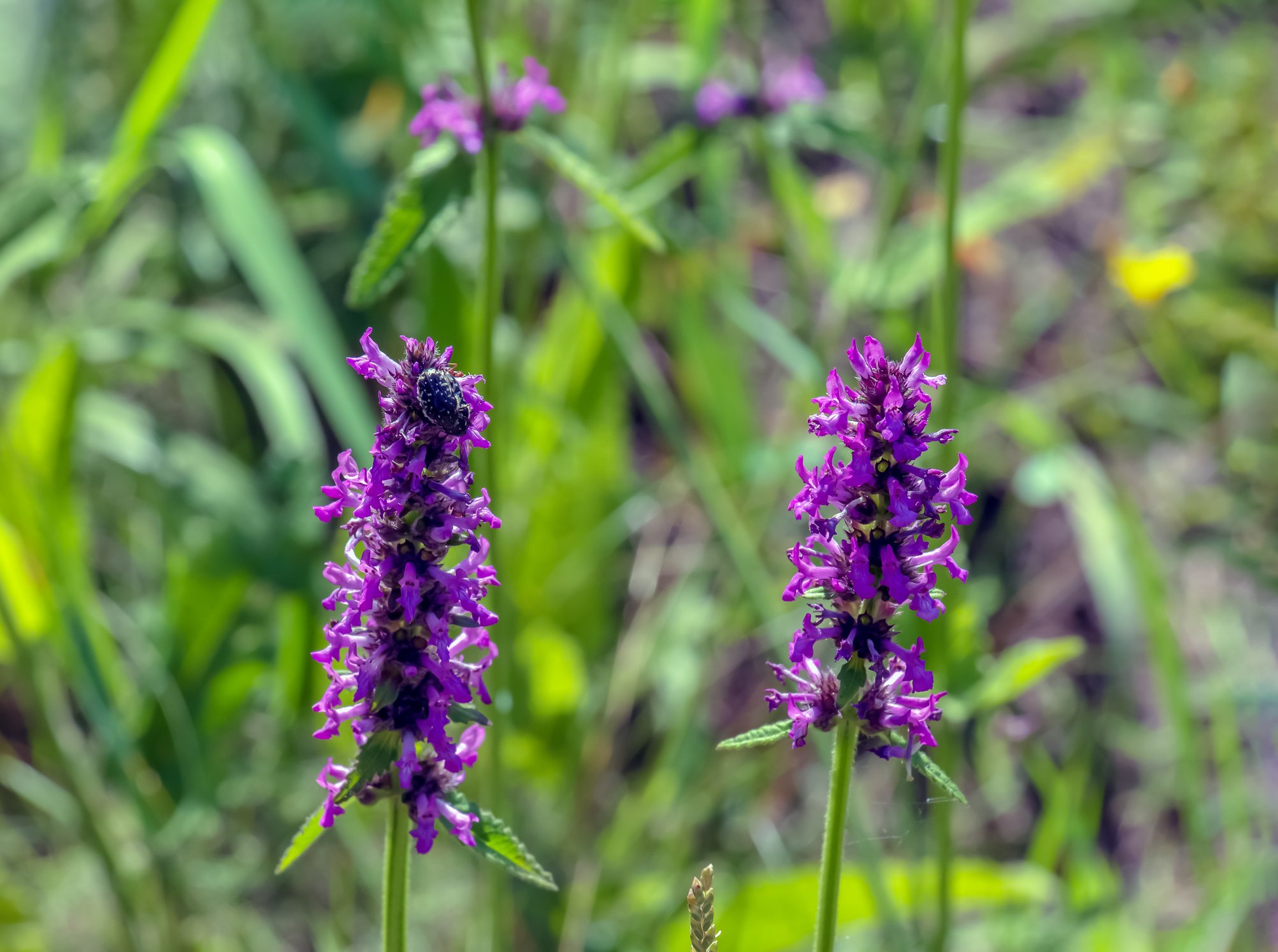
Flowers
Type: Two-lipped (bilabiate), typical of Lamiaceae.
Inflorescence: Dense terminal spikes (3–8 cm long) rising above the foliage.
Colour: Rose-purple to magenta, occasionally pink.
Size: Each flower is about 1–1.5 cm long.
Structure
Upper lip: Hooded, protecting reproductive parts.
Lower lip: Spreading and three-lobed, acting as a landing platform for pollinators.
Flowering time: Typically June to August in temperate climates.
Fruit & Seeds
Type: Nutlets (four small seeds per flower, enclosed in the calyx).
Shape: Oblong to slightly curved.
Dispersal: Primarily by gravity and sometimes ants (myrmecochory).
Seed germination can be slow; stratification may improve success.
Adaptations
Well adapted to unimproved meadows and lightly shaded woodland edges.
Tolerant of a range of soils but prefers neutral to slightly acidic conditions.
Attracts bees and other pollinators with its nectar-rich flowers.
Slow-growing but not invasive, an ideal species for low-maintenance herbal gardens or rewilding projects.
Sustainability/Conservation
Not currently at risk and easy to cultivate in temperate climates.
Wild harvesting should be avoided in areas where it is locally scarce; cultivated sources are preferable.
Leaving a portion of the plant to flower and set seed encourages self-seeding and supports pollinators.

Sources
Bartram, T. (1998). Bartram’s Encyclopedia of Herbal Medicine. Constable.
Fisher, C. (2009). Materia Medica of Western Herbs, (2018 edition). Finchley Road, London. Aeon Books.
Hedley, C & Shaw, N. (2020). A herbal book of making and taking. Finchley Road, London. Aeon Books.
Hoffmann, D. (2003). Medical Herbalism: The Science and Practice of Herbal Medicine. Healing Arts Press.
McIntyre, A. (2019). The complete herbal tutor, revised and expanded edition. Finchley Road, London. Aeon Books.
Plants of the World Online | Kew Science. (n.d.). Plants of the World Online. https://powo.science.kew.org/
Disclaimer: This page is for educational purposes only. Consult a qualified medical herbalist before using herbs, especially during pregnancy, when trying to conceive, while breastfeeding, for medical conditions, or with children.
Read the full disclaimer → Medical Disclaimer.