


Lily of the Valley
(Convallaria majalis)
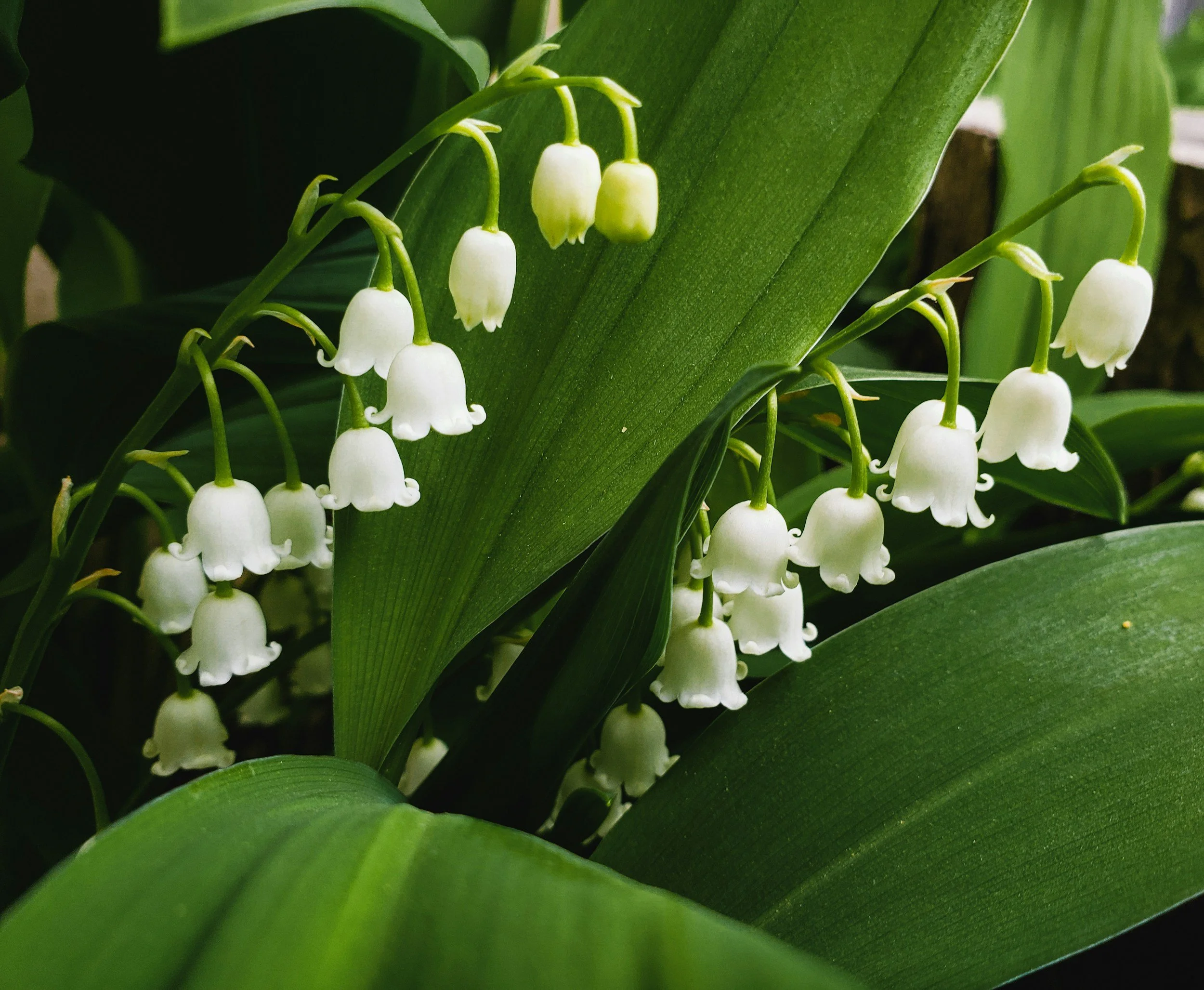
Convallaria majalis (lily-of-the-valley) is a classic European woodland plant best known in herbal medicine for its potent, digitalis-like cardiac glycosides. Historically used in small, carefully prepared doses for functional cardiac support, particularly where a gentler, shorter-acting cardiotonic was sought, Convallaria sits firmly in the category of herbs whose traditional reputation is matched by a narrow margin between “dose” and danger. Today, it’s valued mainly as an important medicinal plant in the historical record and pharmacognosy, while also being widely recognised as an ornamental spring flower with significant toxicity if misused.
Plant family: Asparagaceae
Other significant names: Our Lady’s tears; Mary’s tears
Parts used: Folia (leaves)
Common forms of prescription: Tincture
Restriction: The Human Medicines Regulations 2012, Schedule 20, Part II
This information is for educational purposes about traditional herbal use and is not a substitute for medical advice or treatment. Convallaria majalis is a Schedule 20 restricted herb and should only be used under the supervision of a qualified medical herbalist or appropriate healthcare professional.
Lily-of-the-valley (Convallaria majalis) - Clinical Snapshot
(Educational purposes only)
Primary actions
Cardiac tonic (cardiac glycosides)
Contains potent cardiac glycosides (incl. convallatoxin) with digitalis-like activity.Positively inotropic (increased force of contraction)
Traditionally classed as a cardiotonic that supports myocardial contractility.Negatively chronotropic/dromotropic (reduced rate / AV conduction)
Cardiac glycosides can reduce the rate and conduction; the therapeutic window is narrow, and toxicity can worsen arrhythmias.Diuretic
Traditionally used where fluid retention is associated with cardiac weakness.

Primary indications
Convallaria majalis is a Schedule 20 (Part 2) restricted herb in the UK and is not suitable for self-treatment. Use is limited to qualified practitioners prescribing within the legal dose limits, following a 1:1 consultation.
When considered clinically (under supervision), it is primarily discussed for:
Heart failure
Traditionally used as a cardiotonic to support a failing heart, particularly where contractile strength is reduced.Cardiac insufficiency
Used in traditional Western practice for functional weakness of the heart, with careful professional dosing due to potency.Angina
Historically listed for cardiac-related chest pain patterns, though angina always warrants full medical assessment and management.Endocarditis
Mentioned historically, but clinically, this is an urgent medical condition requiring immediate conventional care (not self-treatment).
-
UK legal restriction: Schedule 20 (Part 2) - practitioner-only use within maximum dose limits.
Pregnancy & lactation: Avoid.
Children: “Extreme cases only” with caution (professional supervision).
Avoid with cardiac glycosides (e.g., digoxin/digitalis): additive effects - increased toxicity risk.
Avoid/caution with potassium-depleting factors (e.g., some diuretics; corticosteroids; irritant laxatives): low potassium increases cardiac glycoside toxicity risk.
Other interactions flagged: quinine and some antibiotics (requires professional medicines check).
-
Lily-of-the-valley contains potent cardiac glycosides; toxicity can be serious. Suspected ingestion warrants urgent medical assessment.
-
Signs of toxicity (digitalis-like) — Convallaria majalis
Early / common (often the first clues)
Nausea, vomiting, abdominal cramping, diarrhoea
Loss of appetite / “can’t face food”
These GI symptoms are classic in cardiac glycoside toxicity.
Neurological / “systemic” symptoms
Headache
Dizziness, weakness, marked fatigue
Confusion, drowsiness, feeling generally unwell (malaise)
These are commonly described alongside the GI picture.
Visual disturbance (a big tell)
Blurred vision
Halos around lights (often described as yellow/green)
Colour changes (less common but classically noted with glycoside toxicity)
Cardiac signs (the dangerous bit)
Very slow pulse (bradycardia), light-headedness, near-fainting
Palpitations or “irregular heartbeat”
Chest pain
Cardiac glycosides can trigger AV block and multiple arrhythmias, and this is what makes lily-of-the-valley poisoning potentially life-threatening.
Severe / red-flag toxicity (urgent)
Fainting / collapse
Severe shortness of breath or “can’t catch my breath”
Marked confusion / altered mental state
Sustained or worsening irregular heartbeat (can progress to cardiac arrest)
-
In spring woodlands, lily-of-the-valley leaves can be mistaken for wild garlic (Allium ursinum), but lily-of-the-valley is toxic if eaten, so careful ID matters.
Quick ways to tell them apart (before you pick):
Smell test (best first check): crush a leaf, wild garlic smells strongly of garlic; lily-of-the-valley does not.
How the leaves grow: wild garlic leaves rise individually from the plant base; lily-of-the-valley typically has two or three leaves on a stem.
Flowers (if present): wild garlic has white, star-shaped flowers in a cluster; lily-of-the-valley has small white bell flowers along one side of a stalk.
Foraging safety tip: if you can’t confidently confirm all features (not just one), don’t eat it, discard the pick and re-check the patch.
If accidental ingestion is suspected: follow NHS poisoning advice and seek urgent help if symptoms develop (especially vomiting/diarrhoea, blurred vision/haloes, or an irregular/slow heartbeat).
Botany and identification (Convallaria majalis)
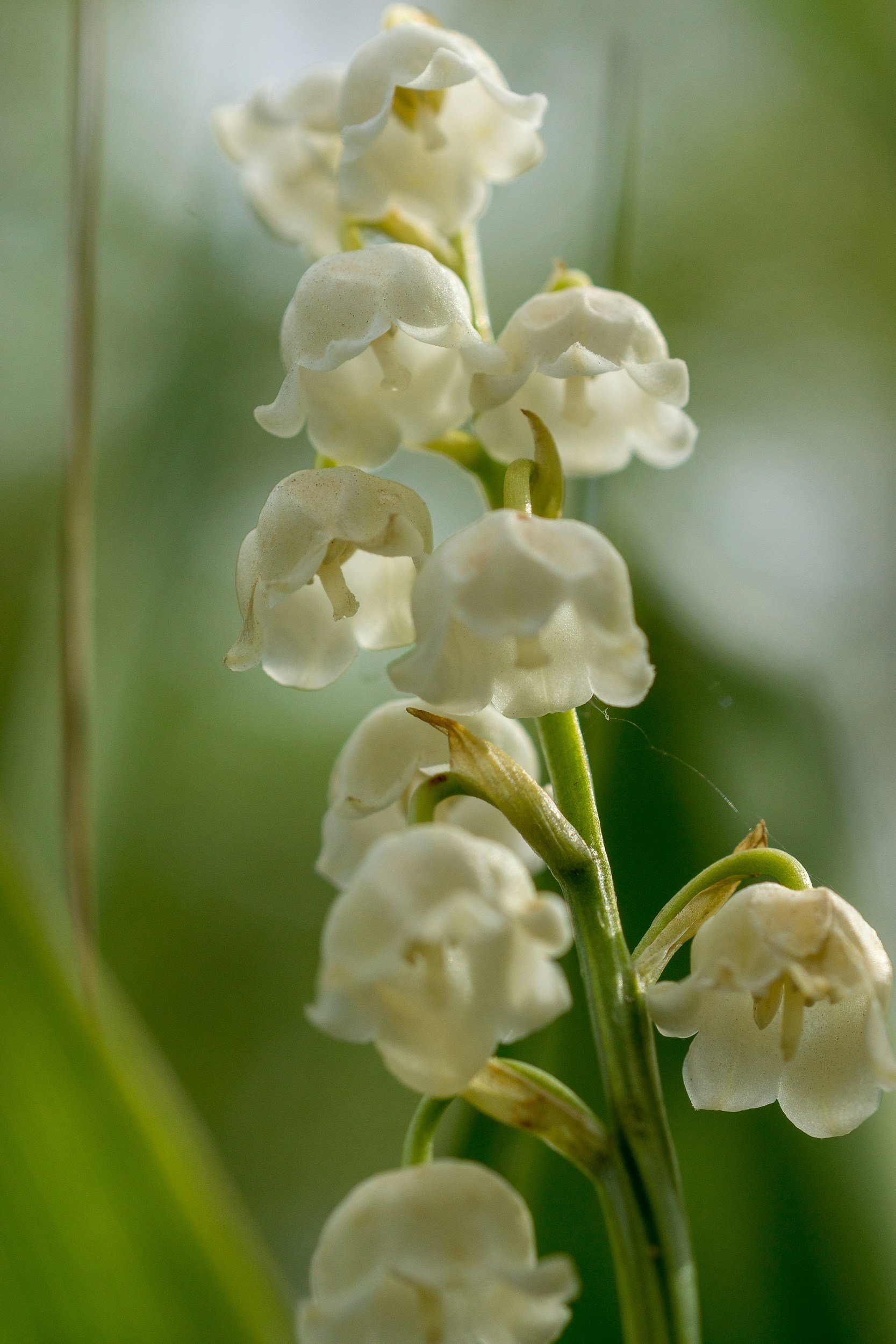
Convallaria majalis (lily-of-the-valley) is a rhizomatous perennial geophyte in the Asparagaceae. In the wild, it is native from Europe to the Caucasus, thriving in temperate woodland conditions, and it spreads via creeping rhizomes to form tight, often carpet-like colonies.
Where it grows (UK habitat)
In the UK, it is most often associated with woodland floors, especially dry woodlands on chalky soils, and can also occur on limestone pavements and in gardens (and sometimes as a garden escape). It is found across the UK but is not common in Scotland or Ireland.
Key identification features
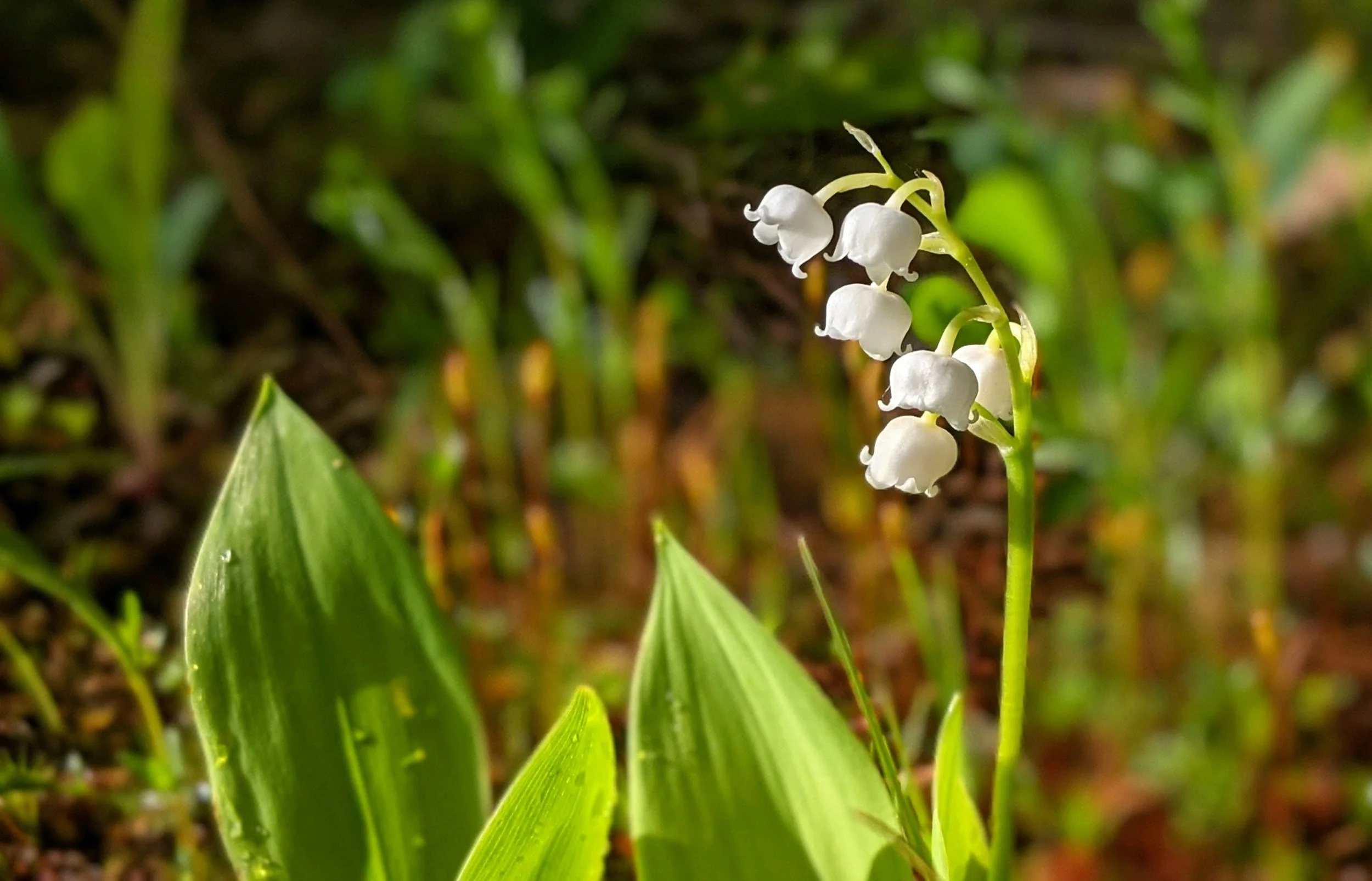
Growth habit: low, spreading perennial forming extensive colonies.
Height: typically up to around 25 cm in flower.
Leaves: usually basal leaves in pairs, oval/elliptic, with smooth (untoothed) margins and clear parallel venation; the paired leaves are a useful ID clue.
Flowers: a one-sided raceme of nodding, bell-shaped, white, strongly fragrant flowers (classically May–June).
Fruit: bright red berries later in the season (poisonous).
Traditional and history (Convallaria majalis)
Convallaria majalis (lily-of-the-valley) has a long European history that sits at the crossroads of springtime symbolism and serious medicinal reputation: its May flowering helped shape traditional names and seasonal associations, while early herbals linked the plant to “cordial” support for the heart and mind. Renaissance and early modern writers praised distilled preparations of the flowers, sometimes called Aqua aurea (“golden water”), as strengthening and restorative, and by the 17th century Culpeper described it for weak memory and older complaints such as loss of speech, palsy, and “apoplexy,” even repeating Gerard’s curious folk method of setting the flowers in an ant-hill to draw out a liquid used externally for gout. As medicine modernised, lily-of-the-valley’s cardiotonic reputation became associated with its cardiac glycosides (digitalis-like activity), and modern botanical-medical profiles still note convallatoxin-derived uses under medical supervision, while also emphasising the plant’s established toxicity. Alongside this medicinal thread, it remains culturally iconic, especially in France, where gifting muguet on 1 May persists as a spring tradition.
-
Bone, K., & Mills, S. (2013). Principles and practice of phytotherapy: Modern herbal medicine (2nd ed.). Churchill Livingstone/Elsevier.
Botanical Society of Britain & Ireland (BSBI). (n.d.). Convallaria majalis L. (lily-of-the-valley): Species account / distribution. BSBI Online Plant Atlas. Accessed 17 January 2026, from https://plantatlas2020.org/atlas/2cd4p9h.ew3
California Poison Control System. (2017, May 30). Naturally occurring cardiac glycoside poisoning. University of California, San Francisco. Accessed 17 January 2026, from https://calpoison.org/content/naturally-occurring-cardiac-glycoside-poisoning
Culpeper, N. (1653). The complete herbal. Project Gutenberg (EBook No. 49513, released 2015). Accessed 17 January 2026, from https://www.gutenberg.org/ebooks/49513
Grieve, M. (1971). A modern herbal (C. F. Leyel, Ed.; rev. ed.). Jonathan Cape. (Original work published 1931)
Helsenorge (Giftinformasjonen). (2024, August 29). Liljekonvall (Convallaria majalis) – giftig plante / råd ved forgiftning. Accessed 17 January 2026, from https://www.helsenorge.no/giftinformasjon/planter-og-sopp/liljekonvall/
Helsenorge (Giftinformasjonen). (n.d.). Forvekslingsfare: Ramsløk (wild garlic) og liljekonvall (lily-of-the-valley). Accessed 17 January 2026, from https://www.helsenorge.no/giftinformasjon/planter-og-sopp/ramslok/
Herbal Reality. (2025, May 2). Lily of the valley (Convallaria majalis): Medicinal benefits, safety and research (Last reviewed 02/05/2025). Accessed 17 January 2026, from https://www.herbalreality.com/herb/lily-of-the-valley/
Larkin, D. (2009, May 12). “I am the lily of the valleys”: Lily of the valley. The Metropolitan Museum of Art (The Cloisters Gardens). Accessed 17 January 2026, from https://www.metmuseum.org/blogs/now-at-the-met/2009/i-am-the-lily-of-the-valleys-lily-of-the-valley
Le Monde (Les Décodeurs). (n.d.). Pourquoi offre-t-on du muguet le 1er mai ? Accessed 17 January 2026, from https://www.lemonde.fr/les-decodeurs/article/2017/05/01/pourquoi-offre-t-on-du-muguet-le-1er-mai_5120680_4355770.html
Medicines and Healthcare products Regulatory Agency (MHRA). (2014, December 18). Banned and restricted herbal ingredients. GOV.UK. Accessed 17 January 2026, from https://www.gov.uk/government/publications/banned-and-restricted-herbal-ingredients/banned-and-restricted-herbal-ingredients
MedlinePlus. (2023, July 1). Cardiac glycoside overdose. U.S. National Library of Medicine. Accessed 17 January 2026, from https://medlineplus.gov/ency/article/002581.htm
Morimoto, M., Tatsumi, K., Yuui, K., Terazawa, I., Kudo, R., & Kasuda, S. (2021). Convallatoxin, the primary cardiac glycoside in lily of the valley (Convallaria majalis), induces tissue factor expression in endothelial cells. Veterinary Medicine and Science, 7(6), 2440–2444. https://doi.org/10.1002/vms3.614
Natural Medicines Database. (n.d.). Convallaria majalis monograph (Product ID: 289). Therapeutic Research Center. Accessed 17 January 2026, from https://naturalmedicines.therapeuticresearch.com/
Oxford University Herbaria. (n.d.). Convallaria majalis (Plants 400). University of Oxford. Accessed 17 January 2026, from https://herbaria.plants.ox.ac.uk/bol/plants400/Profiles/CM
Rose, F., & O’Reilly, C. (2006). The wild flower key. Penguin.
Royal Botanic Gardens, Kew. (n.d.). Convallaria majalis L. Plants of the World Online. Accessed 17 January 2026, from https://powo.science.kew.org/taxon/urn:lsid:ipni.org:names:531481-1
Royal Horticultural Society (RHS). (n.d.). Convallaria majalis (lily of the valley) – plant profile. Accessed 17 January 2026, from https://www.rhs.org.uk/plants/convallaria/majalis/details
Service-public.fr. (n.d.). Vente de muguet le 1er mai: règles et tolérance. République Française. Accessed 17 January 2026, from https://www.service-public.fr/particuliers/vosdroits/F35075
Stroh, P. A., Leach, S. J., August, T. A., Walker, K. J., Pearman, D. A., Rumsey, F. J., Harrower, C. A., Fay, M. F., Martin, J. P., Pankhurst, T., Preston, C. D., & Taylor, I. (2014). A vascular plant red list for England. Botanical Society of Britain and Ireland.
UK Government. (2012). The Human Medicines Regulations 2012 (SI 2012/1916), Schedule 20 (restricted herbal ingredients). Legislation.gov.uk. Accessed 17 January 2026, from https://www.legislation.gov.uk/uksi/2012/1916/schedule/20
Wikimedia Commons. (2022). Convallaria majalis kz05 [Photograph by K. Ziarnek]. Accessed 17 January 2026, from https://commons.wikimedia.org/wiki/File:Convallaria_majalis_kz05.jpg
Woodland Trust. (n.d.). Lily-of-the-valley (Convallaria majalis). Accessed 17 January 2026, from https://www.woodlandtrust.org.uk/trees-woods-and-wildlife/plants/wild-flowers/lily-of-the-valley/
Woodland Trust. (n.d.). Wild garlic (Allium ursinum). Accessed 17 January 2026, from https://www.woodlandtrust.org.uk/trees-woods-and-wildlife/plants/wild-flowers/wild-garlic/
