


Ephedra
(Ephedra sinica)
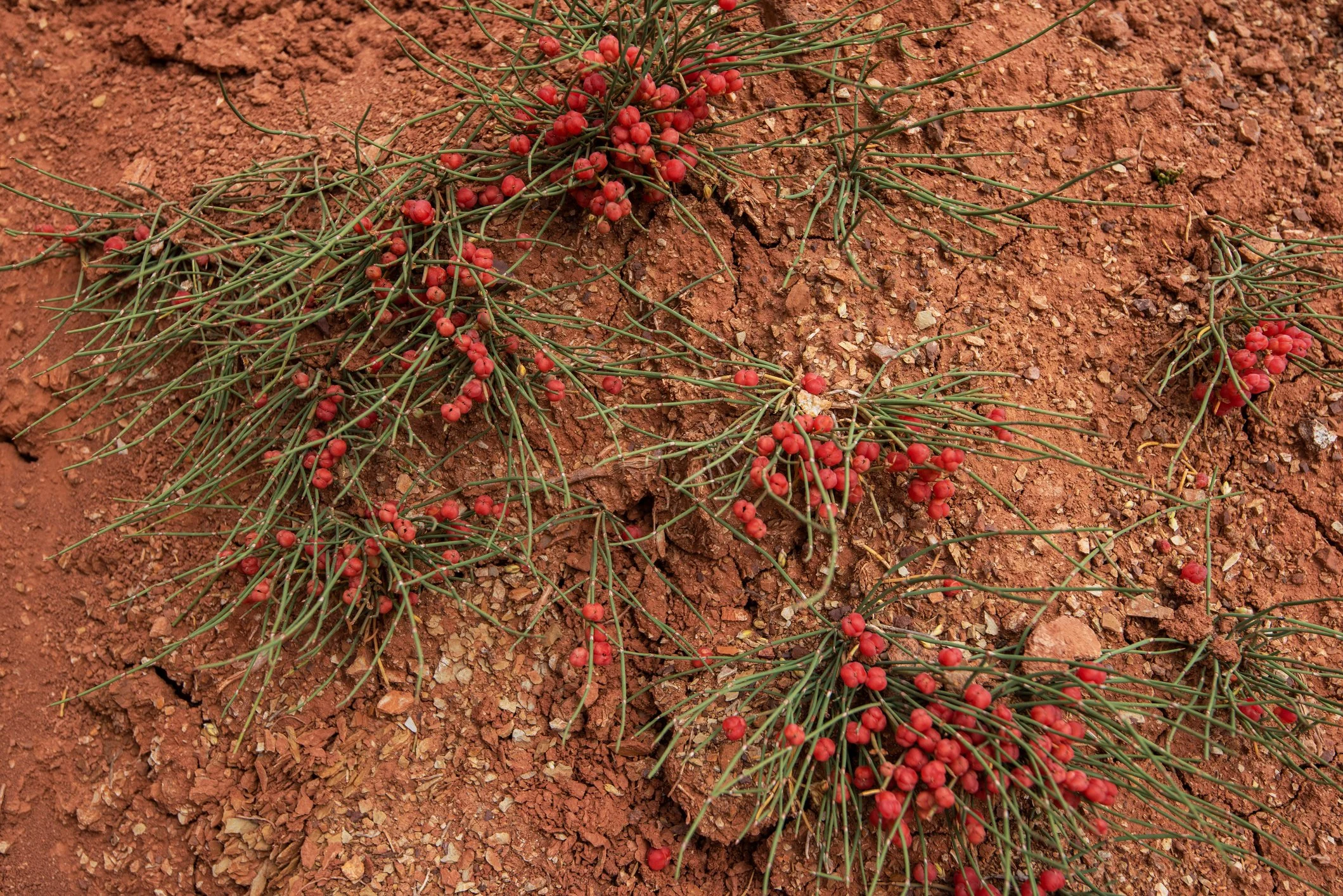
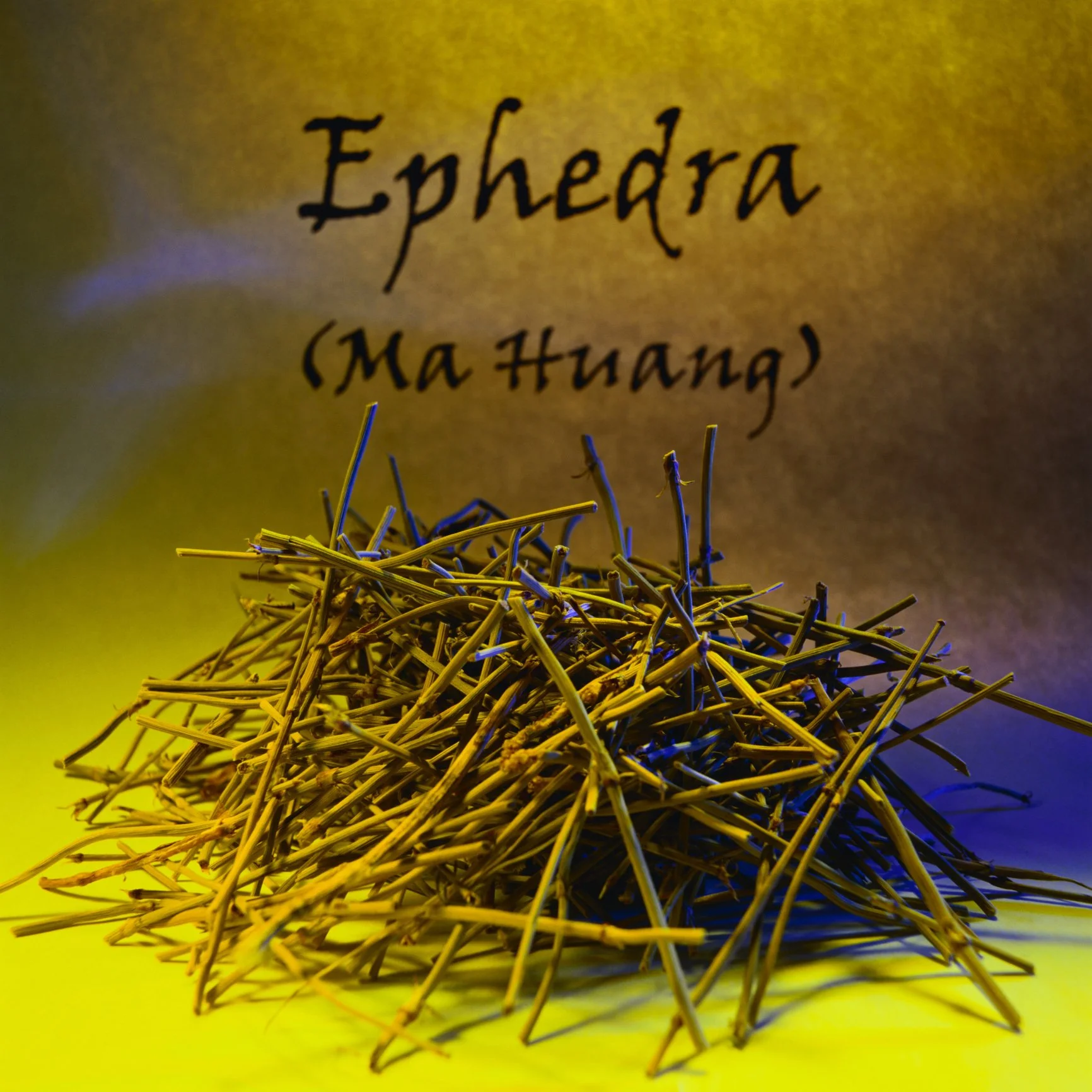
Ma Huang (Ephedra sinica) is a traditional Chinese medicinal shrub best known as a classic “exterior-releasing” herb used for short-term, acute patterns involving chills, fever, body aches, and wheezing. Rich in protoalkaloids (notably ephedrine and pseudoephedrine), it has a strong stimulating effect on the sympathetic nervous system, supporting bronchodilation, raising peripheral circulation, and promoting sweating. Because of its potency and risk profile (especially cardiovascular and nervous system effects), Ephedra sinica is not a general self-care herb and is typically considered of historical, pharmacological, and teaching interest, with any clinical use requiring careful screening, professional supervision, and precise dosing.
Plant family: Ephedraceae
Other significant names: Ma Huang; Chinese ephedra
Parts used: Herba (aerial stems)
Common forms of prescription: Decoction; tincture (where legally permitted and appropriately controlled)
Restriction: The Human Medicines Regulations 2012, Schedule 20, Part II.
This information is for educational purposes about traditional herbal use and is not a substitute for medical advice or treatment. Ephedra sinica should only be used under the supervision of a qualified medical herbalist or healthcare professional.
Ma Huang (Ephedra sinica) – Clinical Snapshot
(Educational purposes only)
Primary actions
Sympathomimetic (adrenergic stimulant)
Promotes “fight-or-flight” activity via ephedrine-type alkaloids, increasing alertness and stimulating the cardiovascular and respiratory systems.Bronchodilator
Helps open the airways and ease tight, wheezy breathing by relaxing bronchial smooth muscle.Decongestant/vasoconstrictor
Reduces swelling of the nasal mucosa and can improve blocked nose/sinus pressure via peripheral vasoconstriction.Diaphoretic (promotes sweating)
Traditionally used to “release the exterior” in early-stage colds with chills, supporting perspiration and peripheral circulation.Thermogenic/metabolic stimulant
It can increase energy expenditure and heat production (which is also one reason it carries a higher risk).
Primary indications
Ephedra sinica is a Schedule 20 (UK) restricted herb with potent alkaloids and a narrow safety margin. In modern Western herbal practice, it is rarely used, and only by suitably qualified practitioners who have undergone careful screening.
When used clinically (under supervision), it is primarily considered for:
Acute bronchospasm with wheeze
, e.g., tight chest/air hunger, where bronchodilation is specifically required.Acute upper respiratory “cold onset” patterns
Especially chills, body aches, and little/no sweating early in an illness (traditional diaphoretic use).Significant nasal/sinus congestion
Short-term support focused on decongestion.
Important safety note: This herb is not suitable for self-treatment. Use requires professional supervision and thorough medication/condition screening.
-
Contraindications (do not use)
Hypertension (especially uncontrolled) or significant cardiovascular disease
(e.g., arrhythmias, angina/ischaemic heart disease, history of stroke).Hyperthyroidism
Glaucoma (especially narrow/angle-closure)
Phaeochromocytoma
Severe anxiety, panic disorder, agitation, or insomnia
Pregnancy & breastfeeding (avoid)
-
Controlled hypertension, migraines, diabetes, prostate enlargement/urinary retention tendency, or where tachycardia is undesirable.
People sensitive to stimulants or with a history of palpitations.
-
Avoid using Ephedra sinica alongside medicines that already raise adrenaline/noradrenaline, or that make the heart and blood pressure more reactive.
Certain antidepressants (MAOI-type medicines)
These can greatly intensify stimulant effects. Avoid combining, and avoid use for at least 14 days after stopping them.Decongestants and other stimulant medicines
e.g., common cold/flu tablets containing pseudoephedrine or phenylephrine, and other “upper”/stimulant products.ADHD stimulants and “pre-workout” style stimulants
Combining stimulants increases risk of palpitations, anxiety, and dangerously raised blood pressure.High caffeine / energy drinks
Can significantly amplify jitteriness, insomnia, palpitations, and blood pressure effects.
Interactions: Do not combine with MAOI-type antidepressants (and avoid for 14 days after stopping), or with other stimulants such as pseudoephedrine/phenylephrine decongestants, ADHD stimulants, pre-workouts, or high caffeine/energy drinks due to increased risk of palpitations and dangerously raised blood pressure.
Botany overview: Ephedra sinica (Ma Huang)
Ephedra sinica (Ma Huang) is a distinctive, rush-like woody subshrub best known for its green, jointed stems and tiny scale leaves. It is native across temperate, dry regions from southern Siberia through Mongolia to northern and north-eastern China, where it grows on open, well-drained ground such as hillsides, plains, grasslands, and stony or sandy soils (Kew, n.d.; WHO, 1999).
Growth form
Usually forms a low, much-branched, wiry shrub with a woody base and upright to spreading stems.
Photosynthesis happens mainly in the green stems, not the leaves.
Stems (the main ID clue)
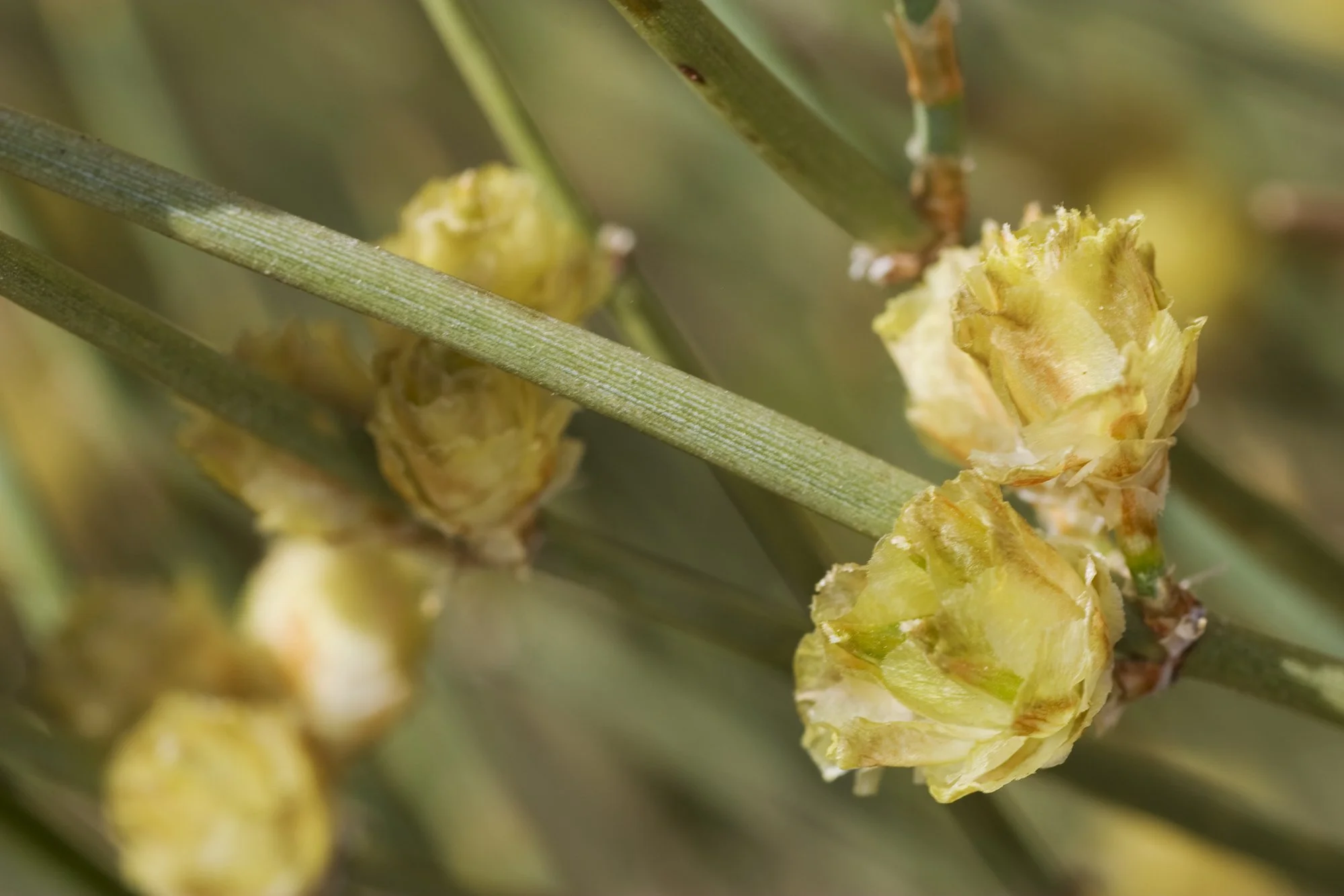
Green, jointed (“segmented”) stems with clear nodes and internodes; overall look is rush-like / leafless at a glance.
Branchlets are typically thin and straight to slightly angular, creating a “switch plant” silhouette.
Leaves
Leaves are tiny, scale-like, sitting at the nodes (often in opposite pairs/whorls depending on the species). They’re easy to miss because they’re reduced and not doing much photosynthesis.
Reproductive structures
Instead of flowers, Ephedra produces small cone-like structures (strobili).
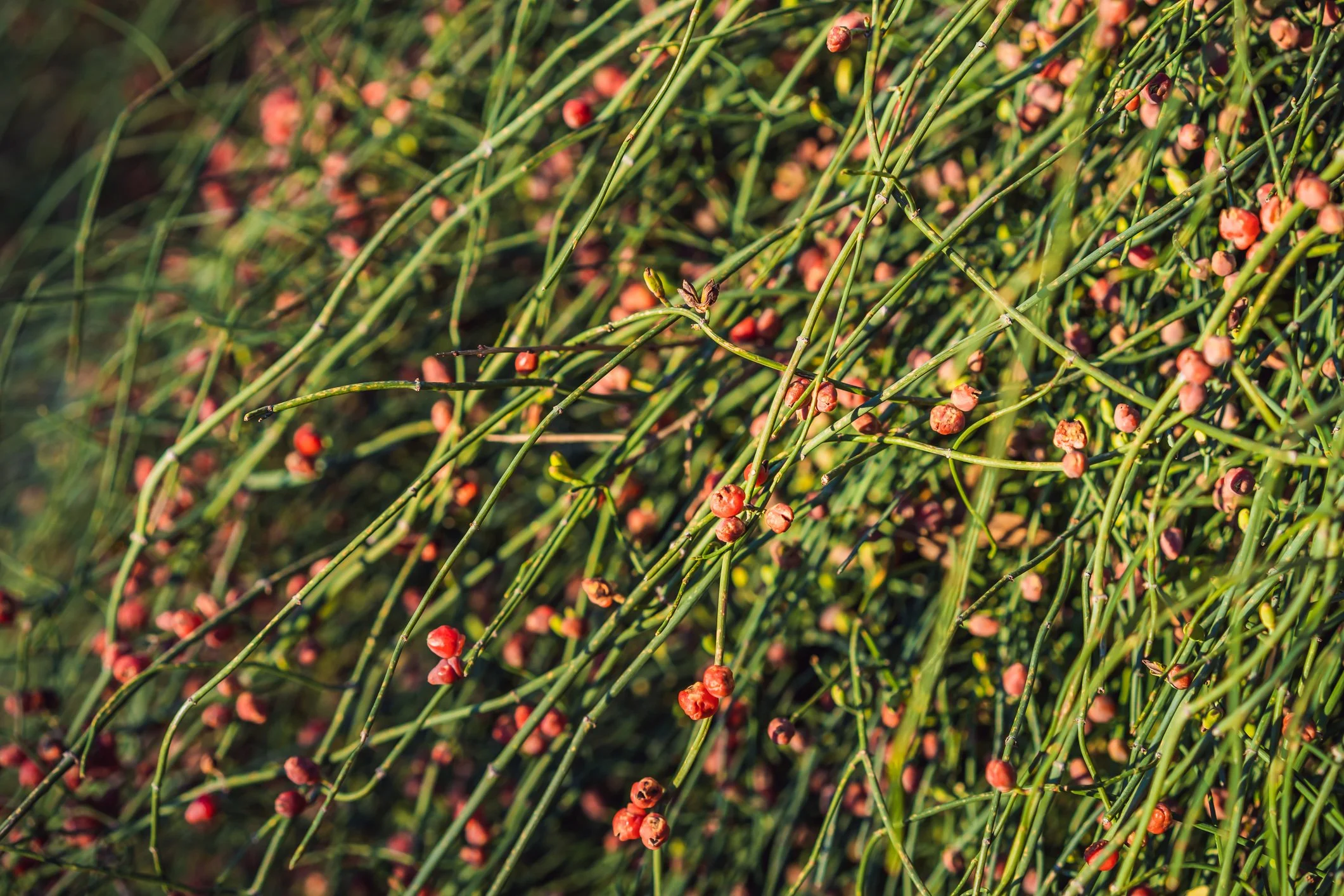
Many species are male/female on separate plants more often than not, and the female cones can develop bright red/orange, berry-like fruits (fleshy bracts around the seed).
Traditional history of Ephedra sinica (Ma Huang)
Ephedra sinica (Ma Huang) is one of the best-known herbs in Chinese materia medica, with a long record of use for acute respiratory and “exterior” presentations. The WHO monograph describes Ephedrae herba as the dried aerial stems of E. sinica (and other Ephedra species containing ephedrine), reflecting its established identity in traditional and pharmacognostic sources (WHO, 1999).
Historical accounts commonly place Ma Huang among the early medicinals recorded in the Shen Nong Ben Cao Jing tradition, where it is associated with lung obstruction and wheezing (Yang, 1998; Lee, 2011). In classical Chinese medical practice, Ma Huang became strongly associated with short-term use in wind-cold/exterior-excess patterns, particularly where there is aversion to cold, body aches, and little or no sweating, and where dyspnoea or wheeze is present (Bensky, Clavey, & Stöger, 2004). It is also notable that traditional prescribing typically uses Ma Huang within formulas, with processing and herb-pairing used to shape intensity and tolerability rather than relying on Ma Huang as a stand-alone stimulant (Bensky et al., 2004).
In the late 19th century, Ma Huang entered modern pharmacology when ephedrine was isolated and characterised by Nagayoshi Nagai (1885). Lee notes that ephedrine was later “rediscovered” in the early 1920s, and its effects contributed to the emerging understanding of adrenergic receptor actions (Lee, 2011). Ephedrine subsequently became widely used in conventional medicine (including for asthma and nasal congestion) before declining as newer, more selective drugs became available (Lee, 2011).
In modern regulation, concerns have shifted from traditional formula-based use to concentrated extracts marketed for stimulation or weight loss. In the UK, Ephedra sinica is listed in The Human Medicines Regulations 2012, Schedule 20 (Part 2) with specific restrictions and maximum doses, and GOV.UK summarises that Schedule 20 Part 2 plants may only be supplied in herbal medicines following a one-to-one consultation and within the listed limits (The Human Medicines Regulations, 2012; GOV.UK, 2014).
-
Bensky, D., Clavey, S., Stöger, E., & Gamble, A. (2004). Chinese herbal medicine: Materia medica (3rd ed.). Eastland Press.
European Food Safety Authority (EFSA) Panel on Food Additives and Nutrient Sources added to Food (ANS). (2013). Scientific Opinion on safety evaluation of Ephedra species for use in food supplements. EFSA Journal, 11(11), 3467. https://doi.org/10.2903/j.efsa.2013.3467
GOV.UK (Medicines and Healthcare products Regulatory Agency). (2014, December 18). Banned and restricted herbal ingredients. https://www.gov.uk/government/publications/list-of-banned-or-restricted-herbal-ingredients-for-medicinal-use/banned-and-restricted-herbal-ingredients
Lee, M. R. (2011). The history of Ephedra (ma-huang). Journal of the Royal College of Physicians of Edinburgh, 41(1), 78–84. https://doi.org/10.4997/JRCPE.2011.116
Medicines and Healthcare products Regulatory Agency (MHRA). (2024, February 20). Update on MHRA safety review of medicines containing pseudoephedrine. https://www.gov.uk/government/news/update-on-mhra-safety-review-of-medicines-containing-pseudoephedrine
National Institute for Health and Care Excellence (NICE). (n.d.). Ephedrine hydrochloride. BNF. Retrieved January 17, 2026, from https://bnf.nice.org.uk/drugs/ephedrine-hydrochloride/
Royal Botanic Gardens, Kew. (n.d.). Ephedra sinica Stapf. Plants of the World Online. Retrieved January 17, 2026, from https://powo.science.kew.org/taxon/urn:lsid:ipni.org:names:30000343-2
The Human Medicines Regulations 2012, SI 2012/1916, Schedule 20, Part 2. (UK). https://www.legislation.gov.uk/uksi/2012/1916/schedule/20/part/2
World Health Organization. (1999). Ephedrae herba. In WHO monographs on selected medicinal plants (Vol. 1). World Health Organization. https://iris.who.int/handle/10665/42052
Yang, S. (1998). The Divine Farmer’s Materia Medica: A translation of the Shen Nong Ben Cao Jing. (Use the exact edition details from your copy—publisher/translator can vary.)