

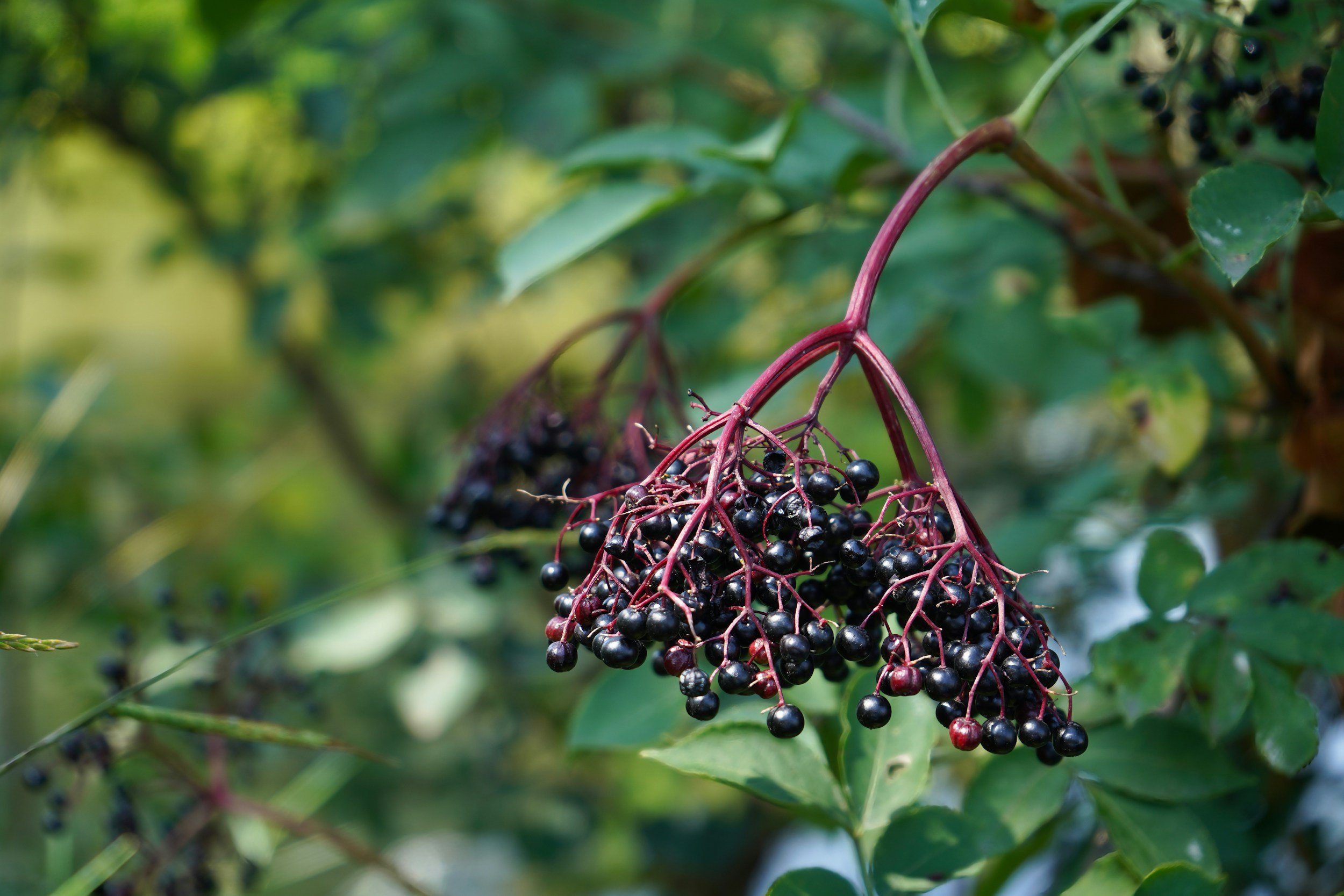
Elder
Elder (Sambucus nigra)
Elder (Sambucus nigra) is a classic hedgerow medicine: easy to find, easy to grow, and used for centuries. Its flowers are taken for gentle seasonal support, while the dark berries are made into syrups and tinctures to nourish and protect. A simple, versatile herb for every home apothecary.
Plant family
Viburnaceae
Other significant names
Elderflower
Elderberry
Black elder
Parts used
Flos (Flower)
Fruct (Fruit)
Folia (Foliage)
Typical forms of prescription
Tinctures
Syrups
Infusions
Decoctions
Infused oil or ointment (leaf)
Dosage:
Tincture (1:2): 20–40 ml per week;
Dried herb: 6–12 g per day.
Elder (Sambucus nigra) - Clinical Snapshot
Primary Actions
Antiviral
Diaphoretic
Diuretic
Anti-inflammatory
Anti-catarrhal
Anti-allergy
Laxative (berries, mildly)
Emetic (unprocessed parts)
Expectorant
Alterative
Emmenagogue (bark and leaves, due to strong laxative effect)
Peripheral vasodilator
Primary Indications
Colds and flu
Other upper respiratory tract infections (especially viral)
Low immune system support
Cystitis
Prostatitis
Constipation (berries)
Rheumatism
⚠️ Cautions / Safety⚠️
Berries are toxic when eaten raw (due to cyanogenic glycosides potential cyanide release)
Caution during pregnancy
Sambucus nigra
Phytochemistry and Pharmacology
-
Includes: Rutin, quercetin, kaempferol
Action: Antioxidant, anti-inflammatory, antiviral, diaphoretic
Use: Flavonoids are central to elderflower’s ability to support immunity and clear upper respiratory infections. They help reduce inflammation, stabilise capillaries, and provide antiviral effects, particularly in the early stages of colds and flu. Rutin also supports vascular integrity, making elderflower useful in conditions involving sinus or skin congestion.
-
Action: Demulcent, anti-inflammatory
Use: This soothing component provides a gentle protective layer over irritated tissues, making elderflower especially useful for dry, scratchy throats or inflamed mucosa, particularly when paired with herbs like marshmallow root or liquorice.
-
Includes: Linalool, geraniol, eugenol
Action: Diaphoretic, mild antimicrobial
Use: Elderflower's aromatic oils encourage sweating, helping to break fevers and clear heat from the body. Though present in small amounts, they contribute to the pleasant fragrance and respiratory soothing effects of elderflower tea.
-
Includes: Caffeic acid, chlorogenic acid
Action: Antioxidant, antimicrobial
Use: These compounds enhance resistance to infection and help combat free radical damage. They add to the herb’s mild antimicrobial action, supporting its traditional use in feverish colds, especially when taken as a hot infusion.
-
Action: Anti-inflammatory
Use: Elderflower's triterpenes further support its anti-inflammatory and tissue-soothing actions, reinforcing its role in managing catarrh, allergies, and mild respiratory congestion.

Traditional use
Bark is a potent purgative. Hot flowers/berry infusions are used for fevers, colds, and diaphoretic properties. Blochwich (1677), in Anatomy of the Elder (1677), recorded that patients drink the hot fruit rob and go to bed to ‘sweat it out’.
Clinical Description
The flowers, especially the berries, are rich in flavonoids that produce antioxidants and anti-inflammatory effects. Herbalists value it as a top antiviral for cold and flu-related viruses. The flowers are also widely used in infusions to treat allergic rhinitis and hay fever, and are safe for children. The flower’s high quercetin content is theorised to help produce an antihistamine effect.
Cultivation/Harvesting
Common wild plant.

Key Botanical Features of Elder (Sambucus nigra)
Growth
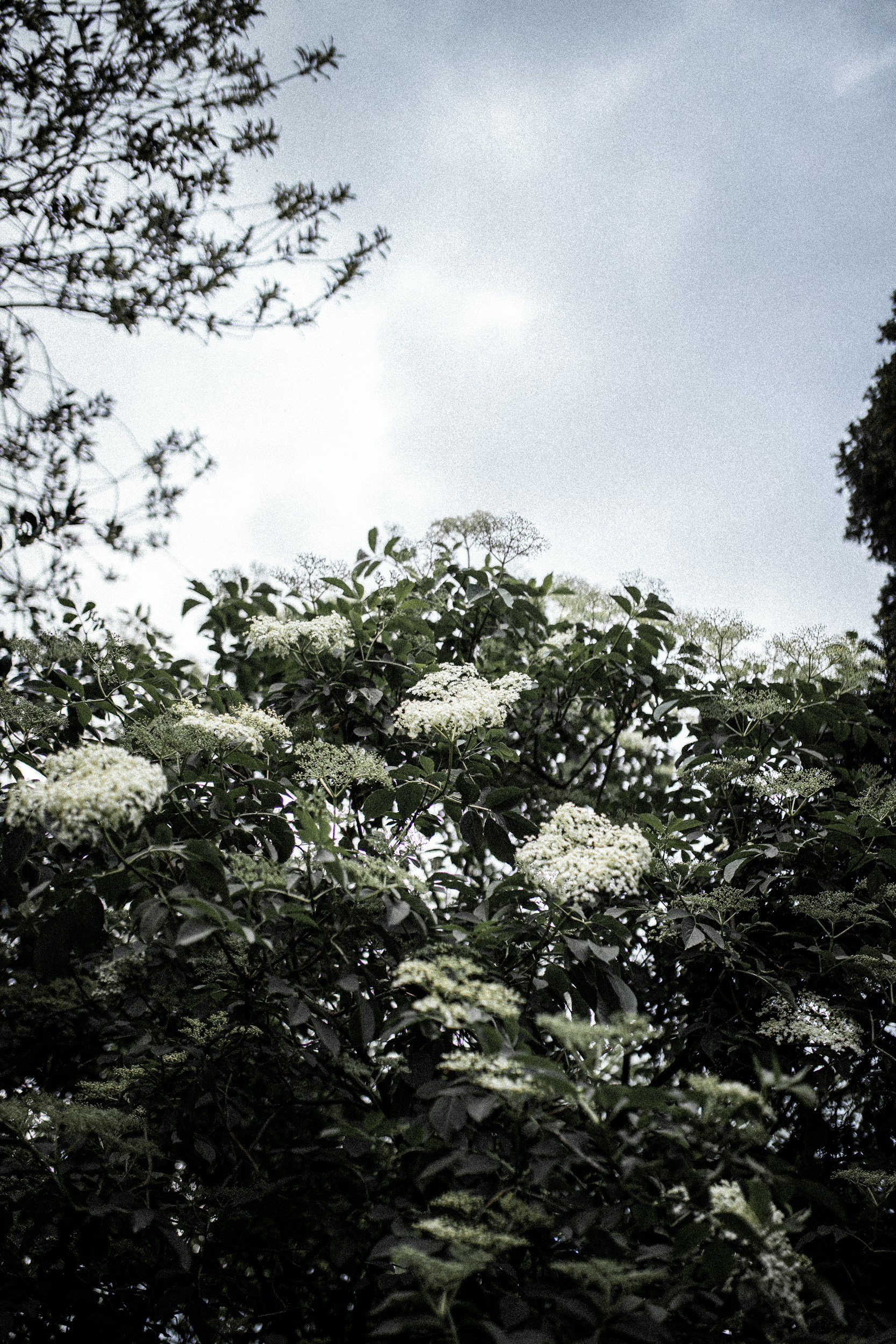
Type: Deciduous shrub or small tree.
Size: Typically 3–6 meters (10–20 feet) tall, but can occasionally grow larger.
Stem: The stems are hollow and have a greyish-brown bark with a slightly rough texture. The plant often has an arching, spreading habit.
Leaves
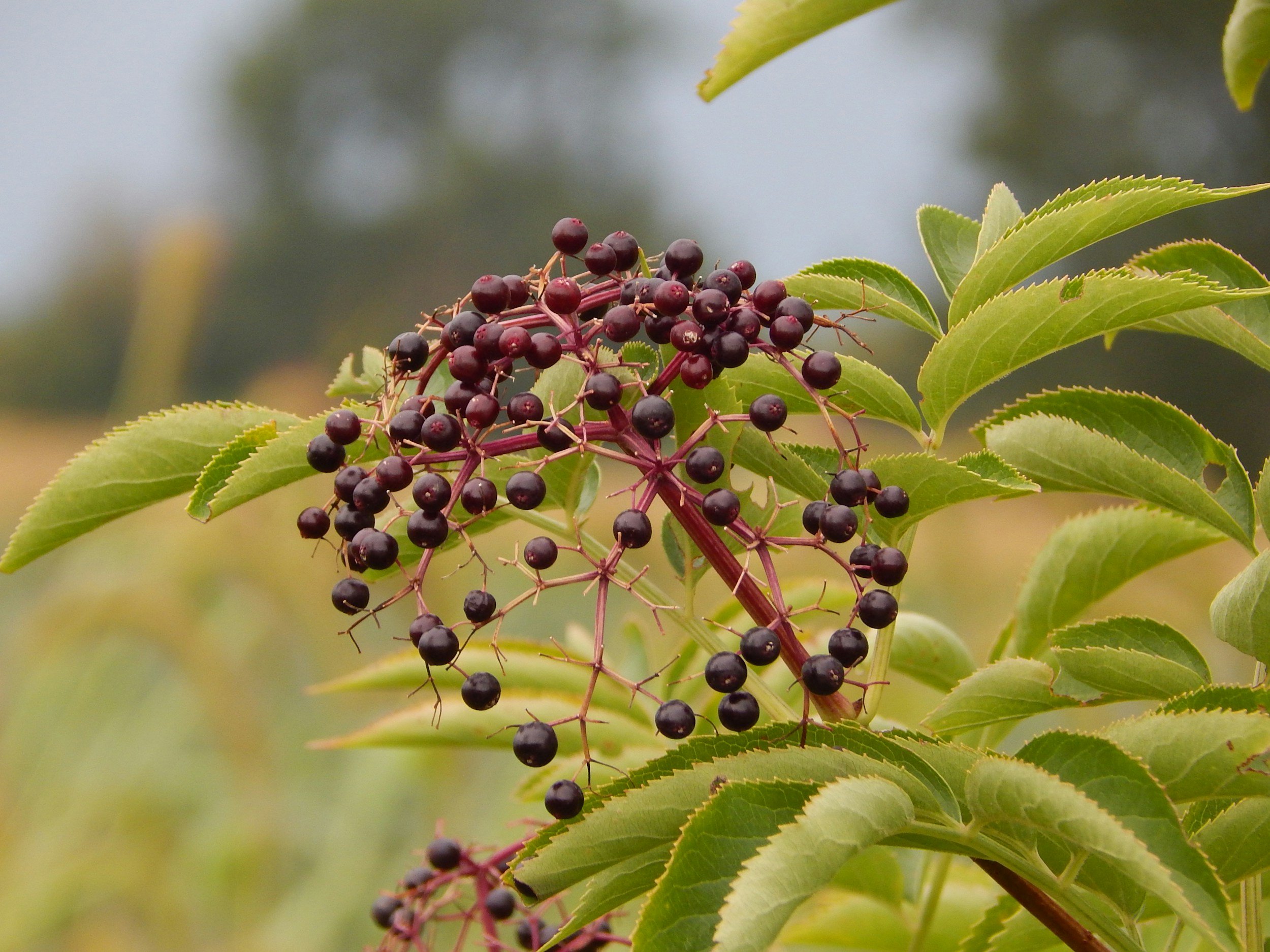
Type: Opposite, compound.
Shape: Each leaf is pinnately compound (feather-like) with 5–9 ovate (oval-shaped) leaflets.
Size: Each leaflet is typically 5–10 cm (2–4 inches) long, with a total leaf length of about 20–30 cm (8–12 inches).
Texture: Leaves have a rough texture on the upper side, while the underside is typically lighter and may have fine hairs.
Colour: Dark green above, pale and slightly hairy underneath.
Flowers
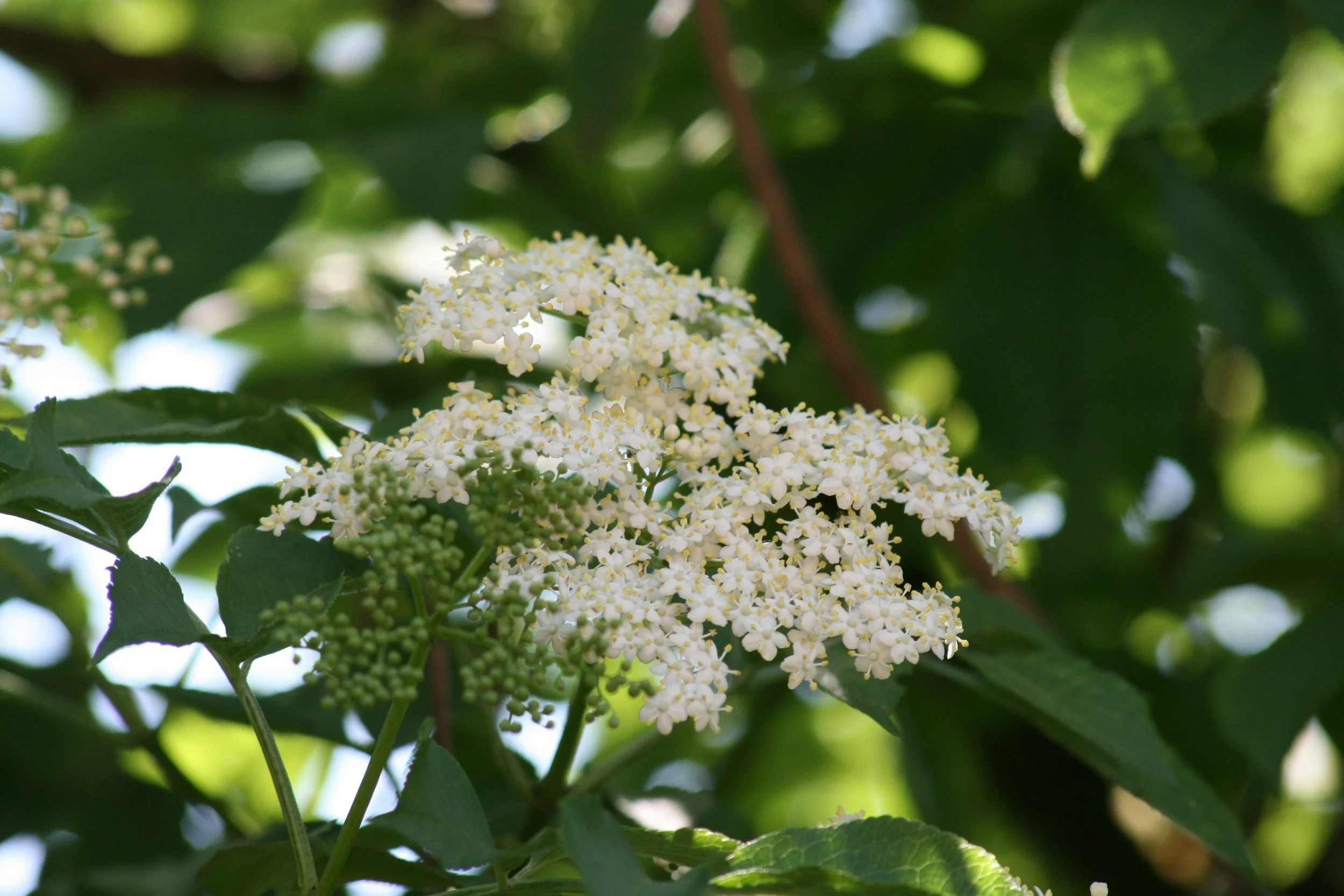
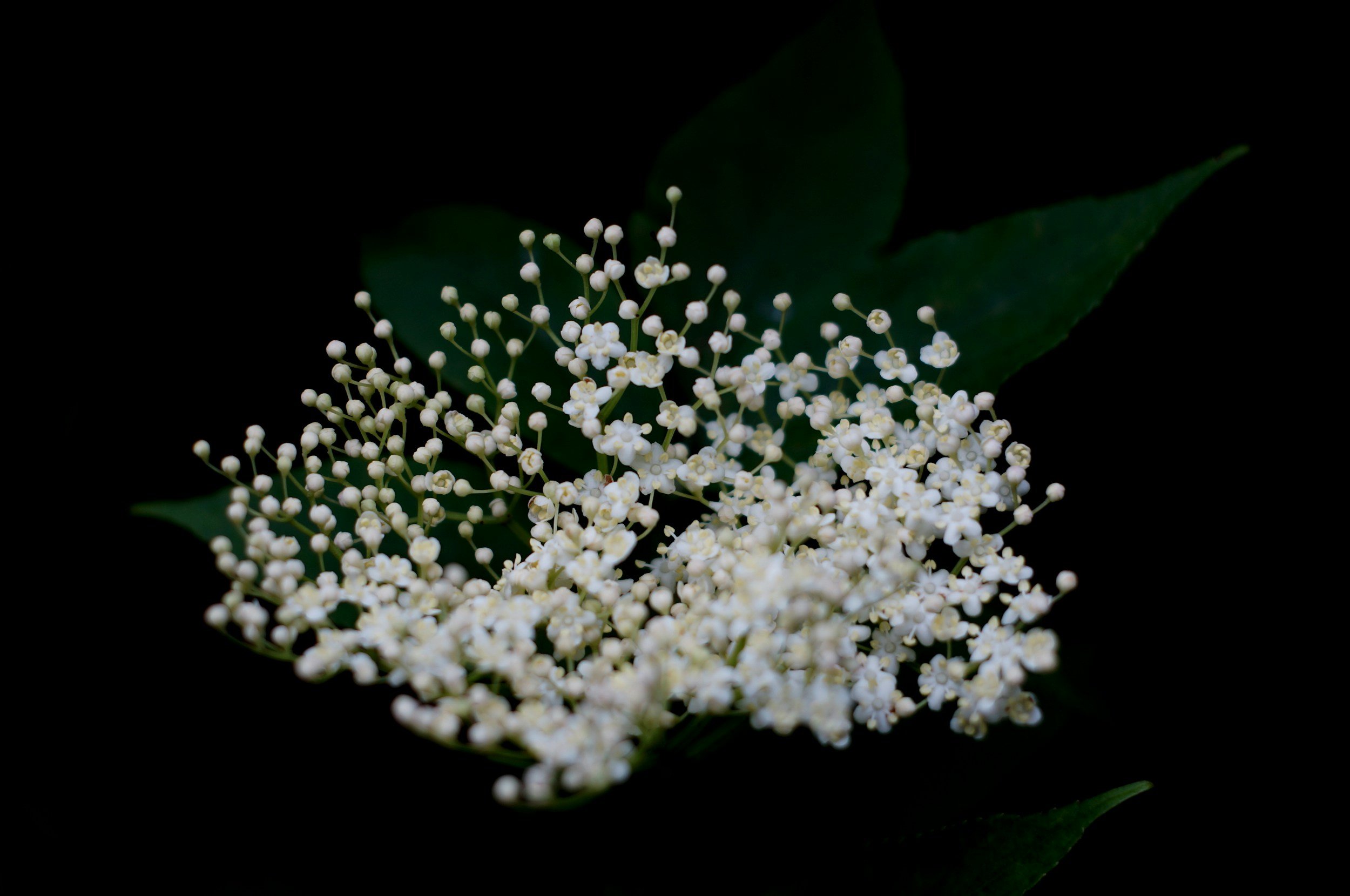
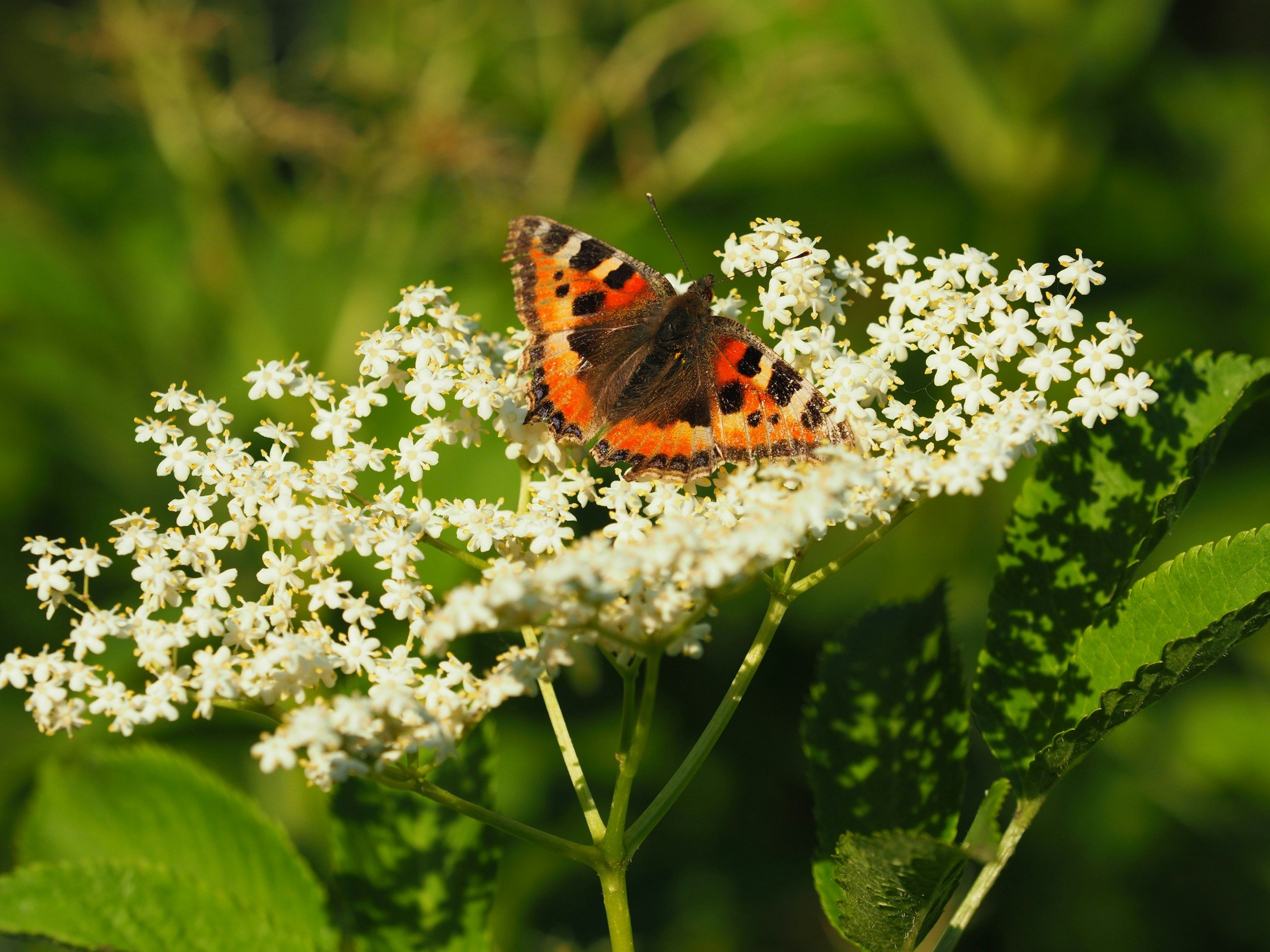
Type: Small, white or cream-colored, clustered in large, flat-topped umbels (flower clusters).
Size: Each individual flower is about 5 mm (0.2 inches) across.
Flower Arrangement: The flowers are arranged in large clusters, creating a characteristic flat or slightly domed inflorescence.
Blooming Period: Late spring to early summer (typically May–June).
Pollination: Primarily insect-pollinated, particularly by bees and flies.
Fruits
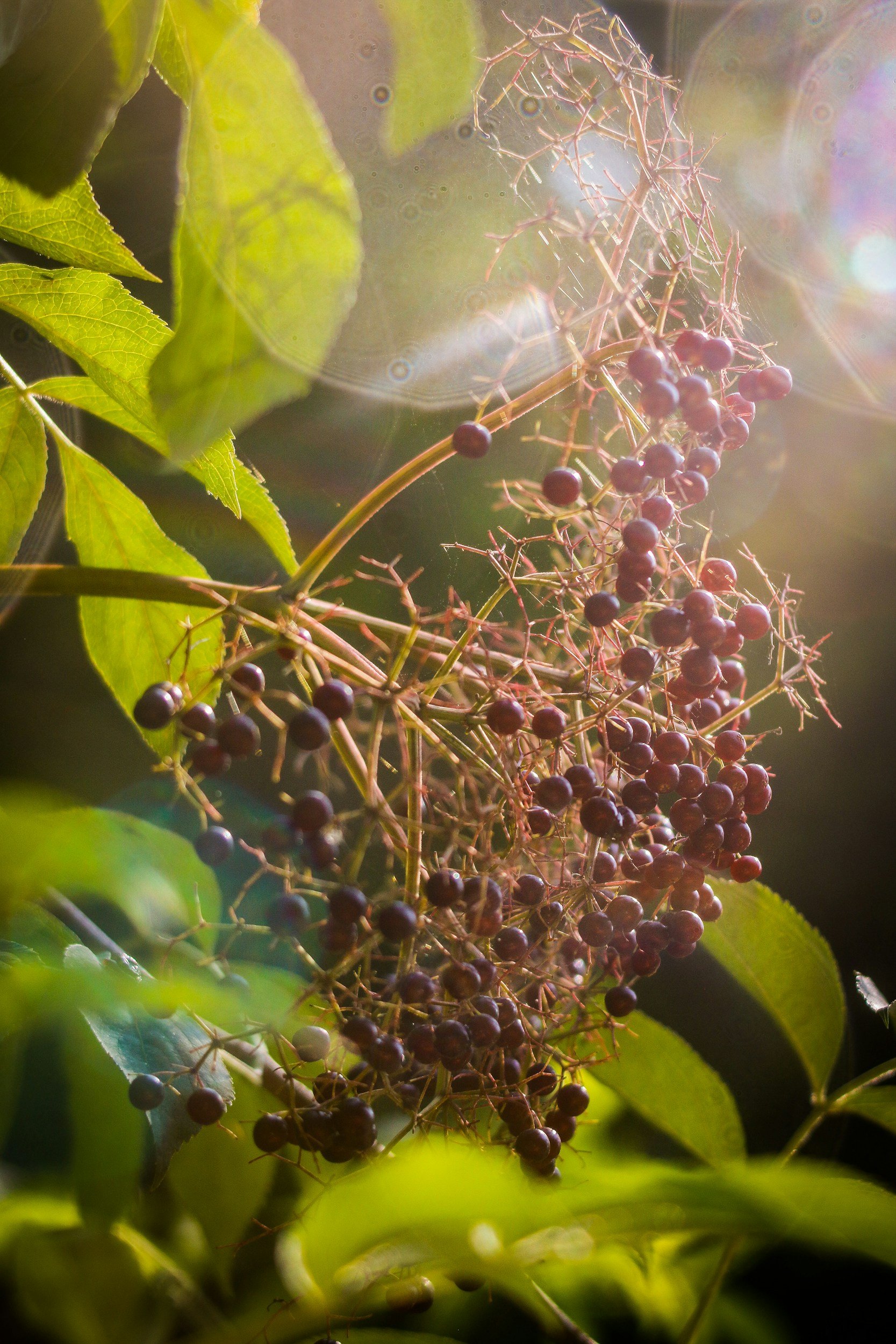
Type: Small, round drupes (stone fruits) that grow in large, flat clusters.
Size: 5–6 mm (0.2–0.24 inches) in diameter.
Colour: Dark purple to black when ripe.
Edibility: The berries are toxic when raw due to cyanogenic glycosides (which can release cyanide when consumed in large quantities). However, the berries are commonly used in cooked forms (jams, syrups, or teas).
Taste: Tart when raw, sweet when cooked.
Roots
Type: Shallow and fibrous.
Function: Helps anchor the plant in the soil and provides stability.
Habitat & Growth Conditions
Climate: Prefers temperate regions and grows well in moist, well-drained soils.
Soil tolerates various soil types but prefers moist, fertile soils.
Sunlight: Full sun to partial shade tends to grow best in sunny areas.
Distribution: Native to Europe, but it has also spread to North America, and can be found in woodland edges, hedgerows, and disturbed areas.
Sustainability/Conservation
Least concern.
Sources
Bartram, T. (1998). Bartram’s encyclopedia of herbal medicine. Constable.
Fisher, C. (2018). Materia medica of western herbs (Rev. ed.). Aeon Books.
Hedley, C., & Shaw, N. (2020). A herbal book of making and taking. Aeon Books.
Hoffmann, D. (2003). Medical herbalism: The science and practice of herbal medicine. Healing Arts Press.
McIntyre, A. (2019). The complete herbal tutor (Revised & expanded ed.). Aeon Books.
Royal Botanic Gardens, Kew. (n.d.). Plants of the World Online. https://powo.science.kew.org/
Mills, S., & Bone, K. (2013). Principles and practice of phytotherapy: Modern herbal medicine (2nd ed.). Churchill Livingstone; Elsevier.
Barnes, J., Anderson, L. A., & Phillipson, J. D. (2013). Herbal medicines (3rd ed.). Pharmaceutical Press.
Benzie, I. F. F., & Wachtel-Galor, S. (Eds.). (2011). Herbal medicine: Biomolecular and clinical aspects (2nd ed.). CRC Press; Taylor & Francis.
Evans, W. C. (2009). Trease and Evans’ pharmacognosy (16th ed.). Elsevier.
Disclaimer: This page is for educational purposes only. Consult a qualified medical herbalist before using herbs, especially during pregnancy, when trying to conceive, while breastfeeding, for medical conditions, or with children.
Read the full disclaimer → Medical Disclaimer.